
Every child is unique—and so is the way they learn. Researchers have long studied intelligence to better understand children’s strengths, and two important theories offer helpful insights: Howard Gardner’s Multiple Intelligences and Raymond Cattell’s Fluid and Crystallized Intelligence.

Gardner's Multiple Intelligences
Howard Gardner (2011) suggests that intelligence is not just about IQ tests. Instead, children show strengths in different areas, such as:
Words (lingustic)
Numbers (logical-mathematical)
Art and design (visual-spatial)
Sports and movement (bodily-kinesthetic)
Music (musical-rhythmic)
Understanding others (interpersonal)
Self-awareness (intrapersonal)
Nature (naturalistic)
This means a child might be a great problem-solver, a natural leader, or an amazing artist—and all of these count as intelligence. For parents, it’s a reminder to celebrate diverse talents and give children many ways to learn.

Cattell’s Fluid and Crystallized Intelligence
Raymond Cattell focused on two types of intelligence (McGill & Dombrowski, 2019):
Fluid intelligence – the ability to solve new problems, think critically, and adapt. This is strongest in youth.
Crystallized intelligence – the knowledge and skills we gain from experience. This grows as children learn and mature.
Together, these show how children use both quick thinking and life experience to learn.

What This Means for Parents
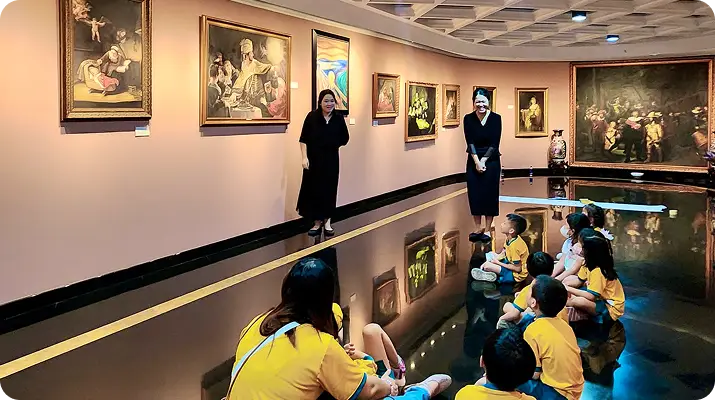
Encourage children to explore different activities — sports, music, puzzles, reading, and nature play.
Focus on your child’s strengths instead of comparing them to others.
Remember: problem-solving (fluid intelligence) and knowledge-building (crystallized intelligence) are both important for lifelong learning.